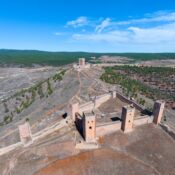


The Southern Iberian System emerges as a exceptional territory where nature manifests itself in its maximum expression. This vast territory, which embraces the provinces of Cuenca, Guadalajara and Teruel, represents One of the most diverse and best preserved natural spaces in the Iberian PeninsulaIts landscape, shaped by centuries of interaction between humans and nature, is home to the second largest continuous forest mass in Europe, a fact that in itself reveals its extraordinary ecological importance.
A mosaic of landscapes
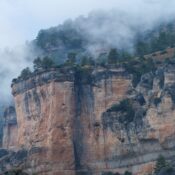
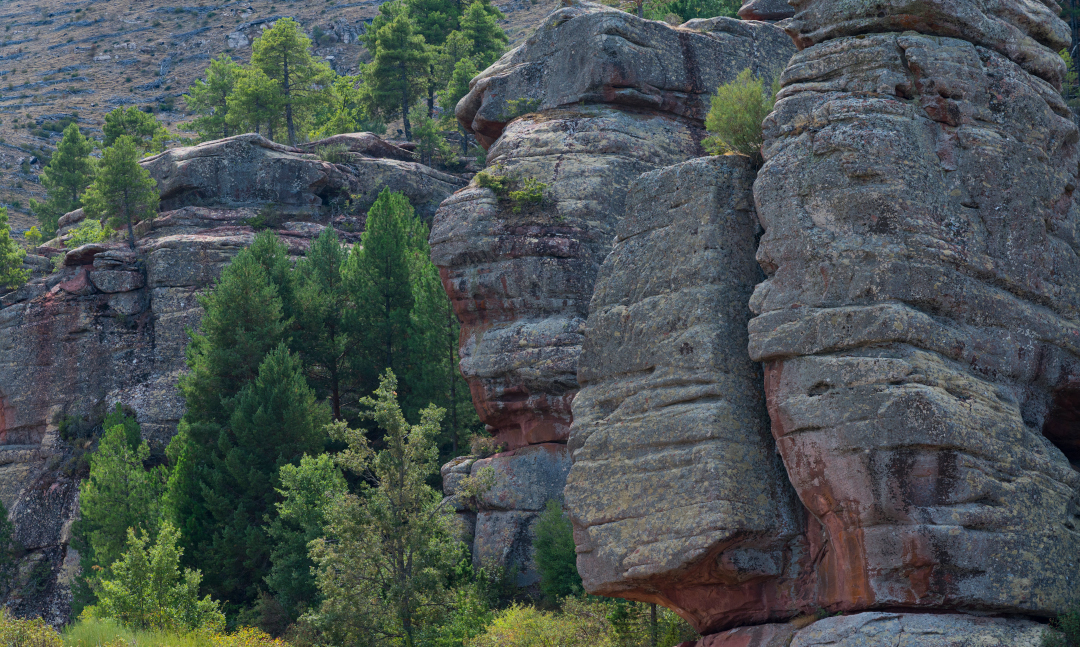
The landscape of the Southern Iberian System is a complex mosaic where intertwine different ecosystems. The steep mountain ranges of Albarracín and Cuenca alternate with the extensive plains of Molina and the spectacular set of gorges and canyons of Alto Tajo, creating a landscape of contrasts that captivates any nature lover. The forests that cover these lands are extraordinarily diverse: extensive black and Scots pine forests mix with ancient oak groves, while the juniper forests, some of the best preserved in Europe, add a touch of uniqueness to the landscape.
Rivers as a vital artery
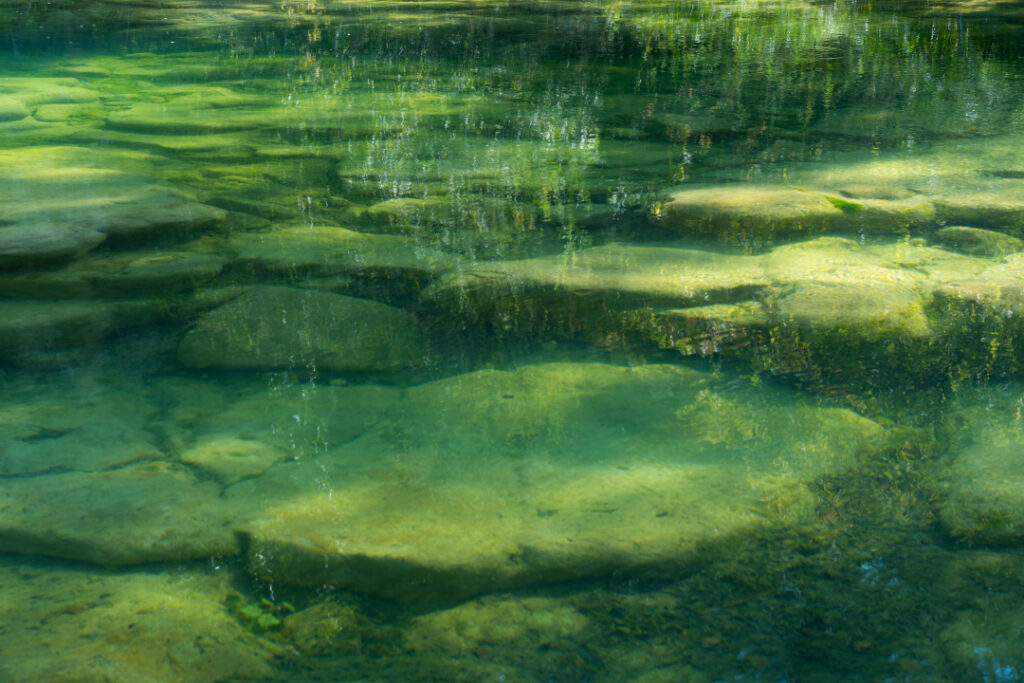
The great rivers that cross the territory – the Tagus, the Guadiela and the Júcar – have carved deep valleys and spectacular canyons over the millennia. These river courses are not only first-class landscape elements, but also act as true vital arteries that connect ecosystems and maintain biodiversityIts banks are home to well-preserved gallery forests, where species such as poplar, willow and ash create natural corridors of vital importance for wildlife.
The kingdom of birds
Raptors: the queens of the sky
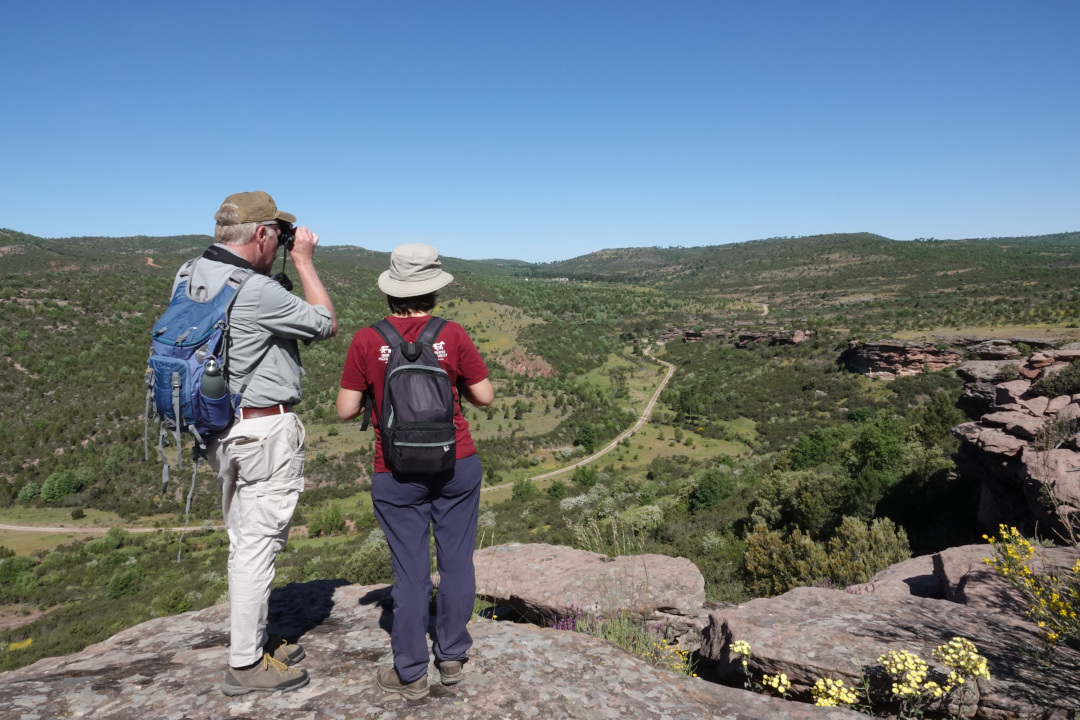
The Southern Iberian System is A paradise for birdwatchersThe skies of these mountain ranges are the undisputed domain of large birds of prey. The golden eagle can be seen soaring majestically over valleys and canyons, while colonies of griffon vultures take advantage of rising thermals to keep watch over the territory. The black vulture, an emblematic species, finds some of its most important feeding grounds in these places and has been reintroduced into the territory through various projects.
The jewels of the steppe
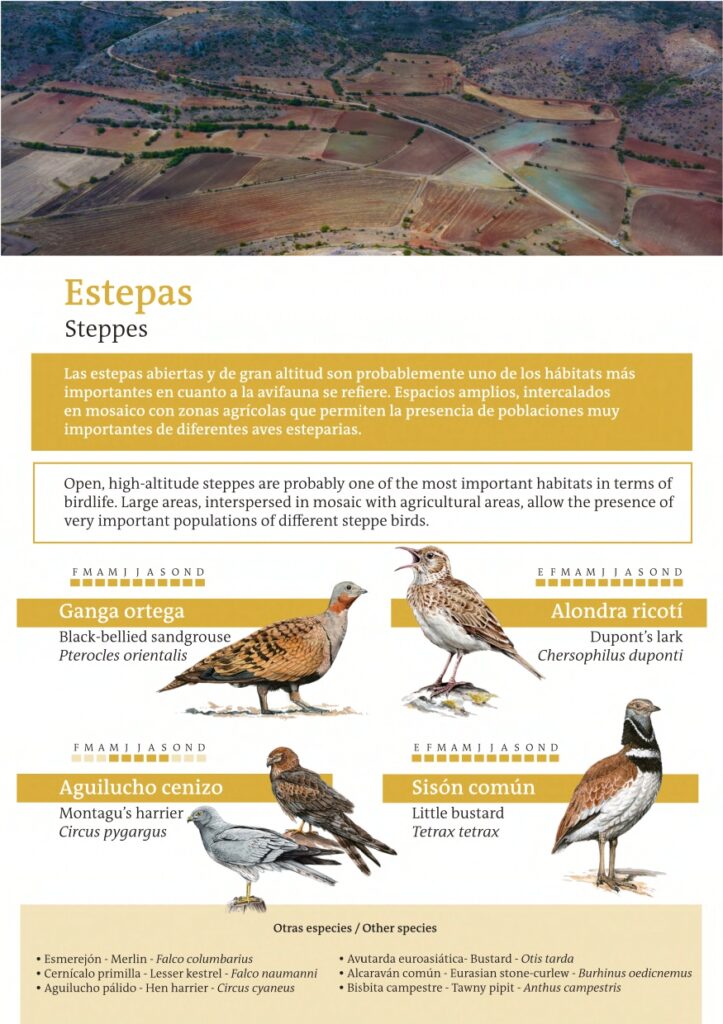
In the paramera and steppe areas, the The Ricoti lark emerges as one of the most unique species and appreciated by specialized observers. This small bird, endemic to the Iberian Peninsula, is found in the plains of the Southern Iberian System one of its last refuges worldwideAlongside it, other steppe species such as the common lark, the stone curlew and the mountain lark complete a cast of species adapted to these unique environments.
Terrestrial fauna
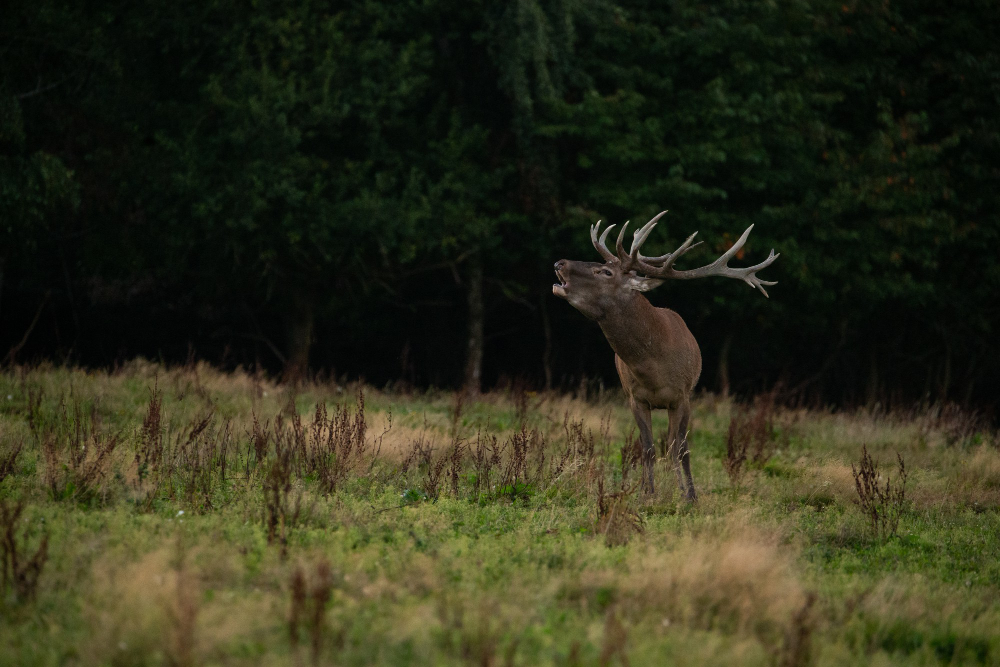
The forests and mountains of the Southern Iberian System are home to a rich community of mammals. The Iberian deer is perhaps the most emblematic, offering one of the most impressive natural spectacles in the region during the rutting season. Wild boars, roe deer, fallow deer and different types of rodents and mesopredators are abundant in the wooded areas. The mountain goat is also present in the steepest areas, offering magnificent opportunities for its observation.
The geological treasure
The Molina-Alto Tajo Geopark
He Molina-Alto Tajo Geopark represents one of the greatest geological attractions of the Iberian Peninsula. This internationally recognized territory offers a journey through 450 million years of Earth's history. Its geological formations include spectacular folds, faults and stratifications that are an open book to understanding the geological evolution of the region.
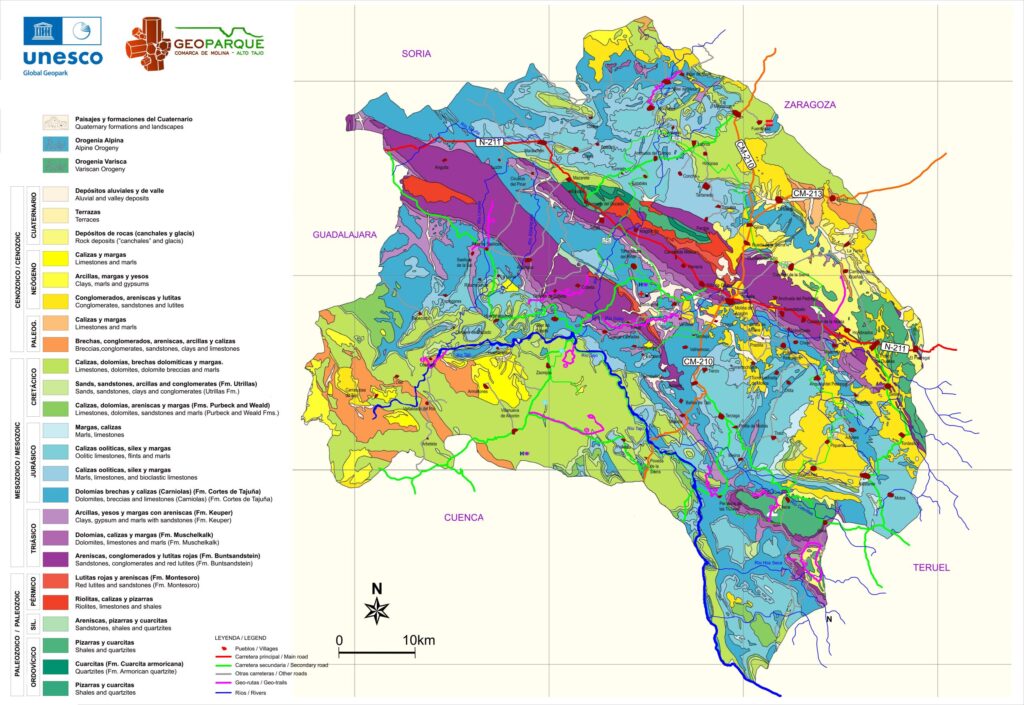
Outcrops of marine fossils remind us that these lands were once covered by ancient oceans, while red sandstone formations tell the story of ancient rivers. The karst landscape, with its sinkholes, sinkholes and haunted towns, adds a unique element of spectacularity to the territory. A paradise for geology enthusiasts and those curious about the world of geology.
The Magic of the Night Sky
Starlight Reserves
The Southern Iberian System has become a reference for astrotourism thanks to the exceptional quality of its night skies. The Starlight certifications obtained at Serranía de Cuenca, Albarracín and the skies of Guadalajara recognise the excellent preservation of the night sky in these areas. Low light pollution and favourable atmospheric conditions allow for spectacular views of the Milky Way and the observation of celestial objects that would be impossible to see from urban areas.
The Engine of Rural Development
Nature tourism is emerging as a fundamental tool for the sustainable development of local communities. The creation of infrastructures such as interpretive trails, wildlife observatories and astronomical observation points is generating new economic opportunities. Rural accommodation, specialized guide services and environmental education activities are creating an economic network that allows population to settle in areas traditionally affected by depopulation.
Conservation Initiatives
The sustainability of tourism in the Southern Iberian System is based on a firm commitment to conservation. Ecological restoration projects are helping to recover degraded ecosystems, while collaboration between public institutions, private entities and local associations guarantees a comprehensive approach to the protection of this valuable natural heritage.
The Southern Iberian System represents an exceptional example of how ecotourism and observation tourism can become effective tools for sustainable rural development. The region not only preserves its natural values but makes them the axis of its future development, demonstrating that nature conservation and economic progress can and should go hand in hand.