

In the heart of the Spanish Iberian System lies a unique natural treasure: the Gallocanta LagoonThis saline wetland, the largest in Western Europe at its altitude, is the result of millions of years of geological evolution and represents one of the most extraordinary ecosystems of the Iberian Peninsula.
An Ancient Origin
The history of Gallocanta dates back to the Tertiary period, when an intense period of erosion gave shape to large flat areas in what we now know as the Iberian System. During the Quaternary, the dissolution of the superficial layers of Jurassic limestone and the lowering of the land until reaching impermeable rocks allowed the accumulation of water, giving rise to this unique ecosystem.
Unique Features
Located 1000 meters above sea level, The Gallocanta Lagoon covers an area of approximately 1000 hectares at the bottom of a closed basin of 540 square kilometersIts approximate dimensions are 8 by 3 kilometers, divided into two main areas: the Lagunazo Pequeño to the north, dominated by the Hermitage of Our Lady of Good Agreement, and Lagunazo Grande to the south, which constitutes the largest area of open water.
A Dynamic Ecosystem
One of the most notable features of Gallocanta is its changing nature. The water level fluctuates considerably, and can vary from more than 2 meters deep to complete droughtThese fluctuations are mainly determined by precipitation, both that which falls directly on the lagoon and that which arrives by surface runoff from the entire basin.
Extraordinary Biodiversity
Since the 1970s, scientific studies have revealed exceptional biodiversity in the lagoon. More than 100 species have been documented. 220 species of birds and numerous taxa of threatened or endemic floraThe ecosystem is home to unique species adapted to extreme salinity conditions and water level fluctuations.
The Cranes: Ambassadors of Gallocanta
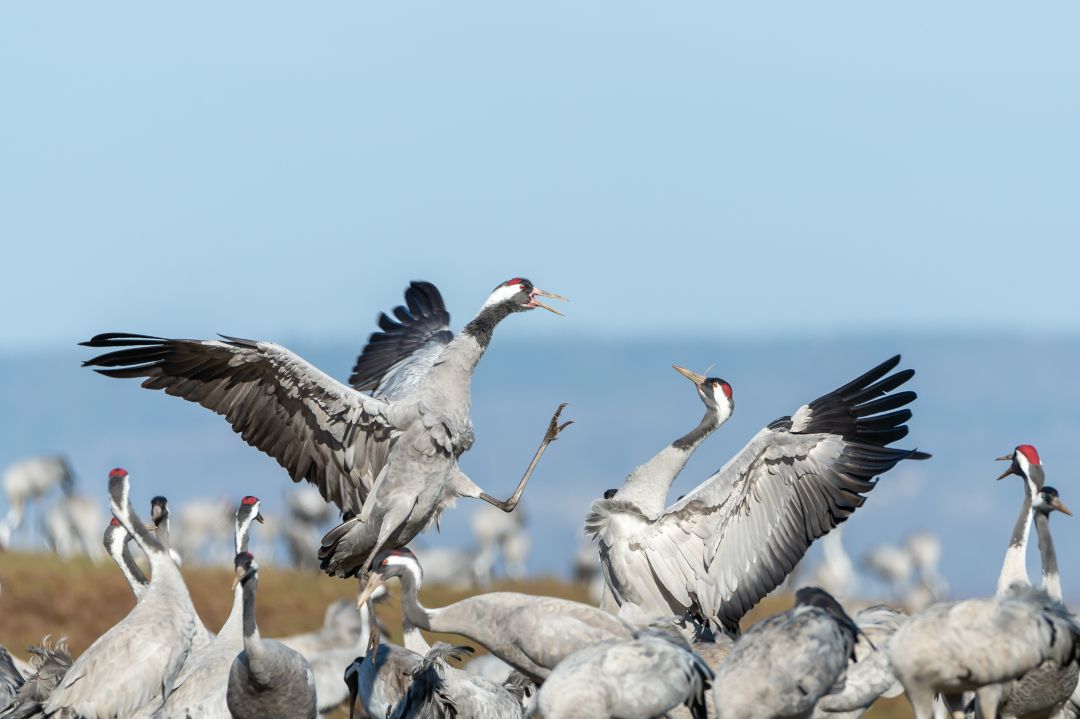
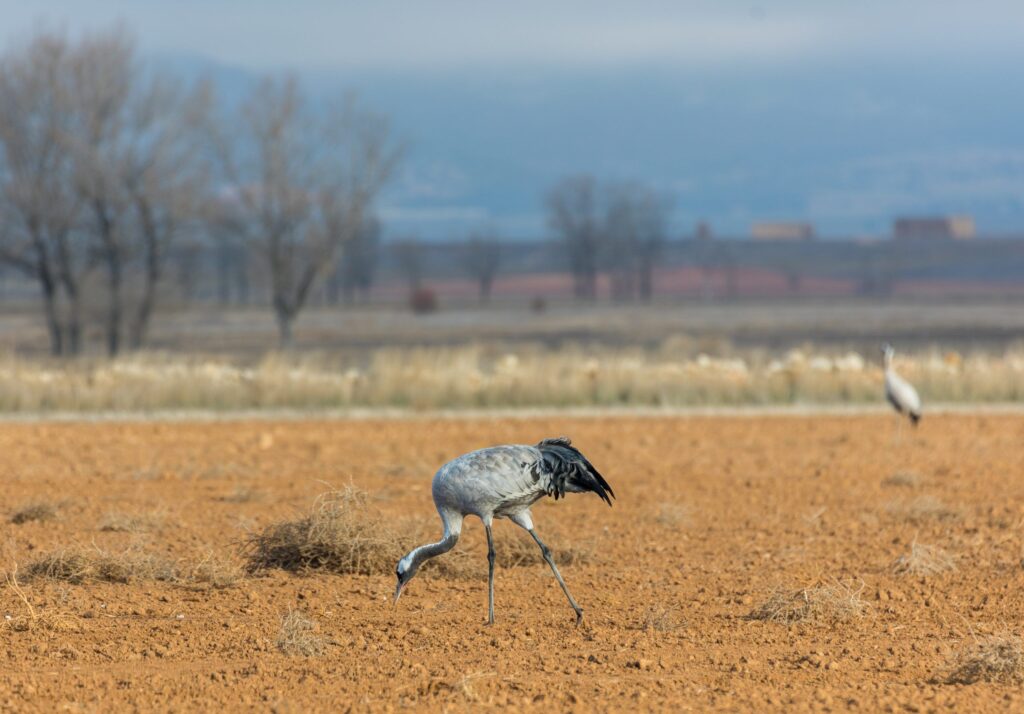
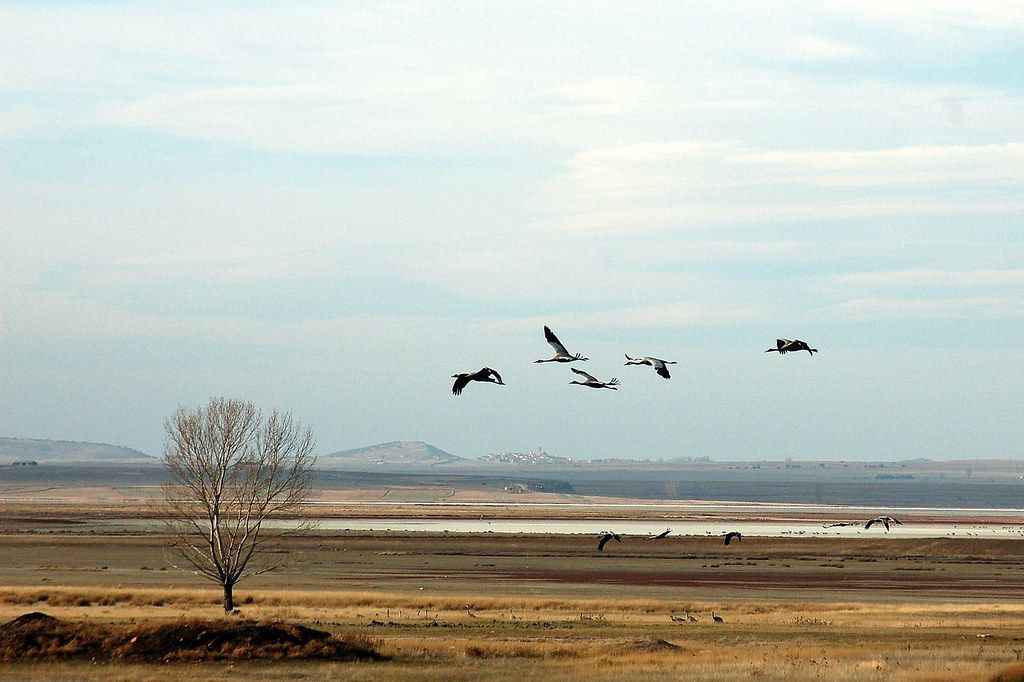
The lagoon is internationally known for being a key point in the migratory route of common cranes (Grus grus). During the autumn and winter, thousands of these majestic birds use Gallocanta as a resting area on their journey from northern Europe to the pastures of Extremadura. In favourable years, some stay throughout the winter, creating an incomparable natural spectacle during sunrise and sunset, when they enter and leave their roosts in the lagoon.
Adapted Flora and Fauna
Life in Gallocanta adapts to extreme conditions. The plants They have developed mechanisms to survive in soils with high levels of salinity, and animal species have evolved to take advantage of the resources available at different times of the year. Some species, such as the crustacean Triops cancriformis, are authentic living fossils that have survived for millions of years.
The Annual Cycle
The lagoon experiences dramatic changes throughout the year:
- In Spring, migratory birds return and the breeding season begins
- Summer brings with it evaporation and the formation of salt crusts
- He Autumn marks the arrival of the cranes and other wintering birds
- During winter, temperatures can drop to -25°C, creating frozen landscapes of singular beauty.
Challenges and Conservation
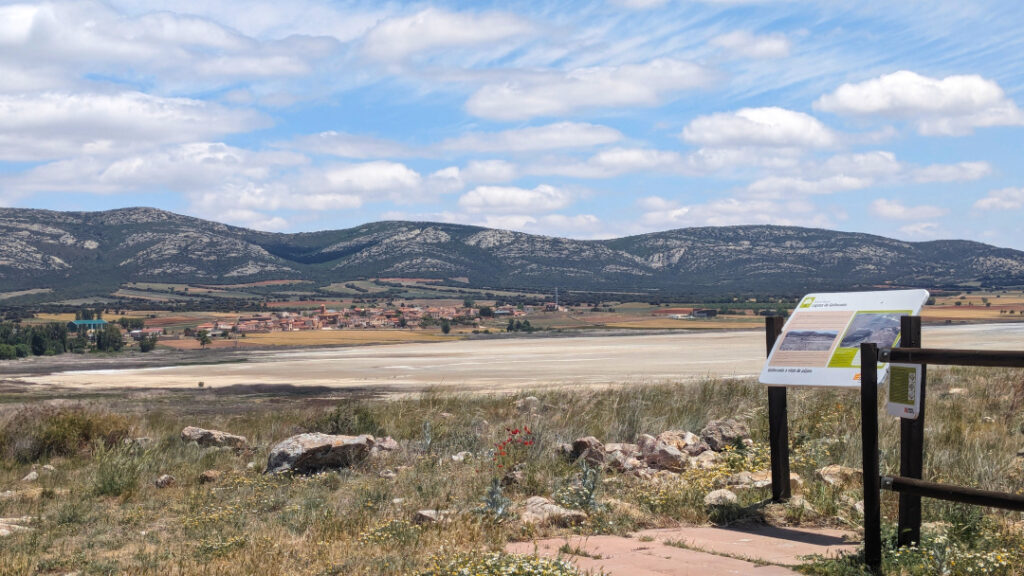
Despite its ecological importance, Gallocanta faces significant challenges. Since the 1970s, a worrying trend in water levels has been observed, even leading to total drought in the winter of 2017-2018. Climate change represents a significant threat to the future of this endorheic ecosystem, with potential consequences for both biodiversity and the local economy.
Protection and Sustainable Tourism
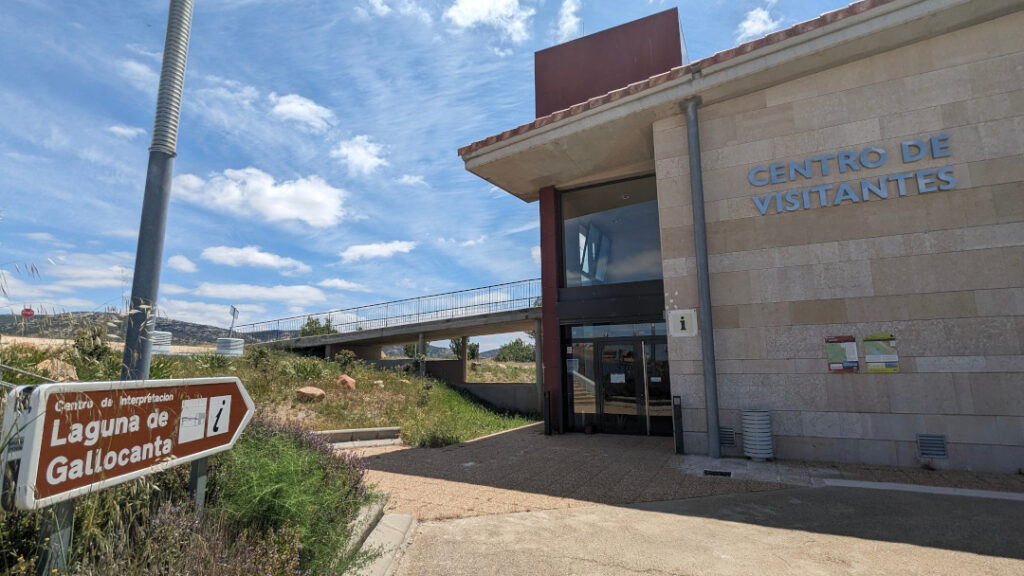
Protection measures have evolved since the 1970s, when the lagoon was declared a Controlled Hunting Zone. In 1994, it was included in the Ramsar Convention as a wetland of international importance, and Since 2006 it is a Directed Nature Reserve within the Natura 2000 NetworkThe development of nature tourism has created new economic opportunities for the region, although it must be managed sustainably to ensure the conservation of the ecosystem.
An Uncertain Future
The future of Gallocanta is closely linked to the effects of climate change. Decreased rainfall and rising temperatures could have devastating consequences not only for flora and fauna, but also for the inhabitants of the basin, who depend on both agriculture and nature tourism.
The Gallocanta Lagoon represents much more than just a wetland; it is a living testimony of geological evolution, a crucial refuge for biodiversity and an example of the delicate relationship between humans and nature. Its conservation is not only important for Spain, but for the whole of Europe, as it represents a unique ecosystem that we must preserve for future generations.